July 3, 2025 | By Louise Yarnall
As workplaces change rapidly due to new technologies and shifting global economics, employers are calling on community college career and technical education (CTE) instructors to ensure their graduates have not only technical skills, but also the professional capabilities to communicate, collaborate, persist through challenges, and engage in lifelong learning. Many CTE instructors, however, harbor doubts about their capacity to develop such skills and mindsets.1
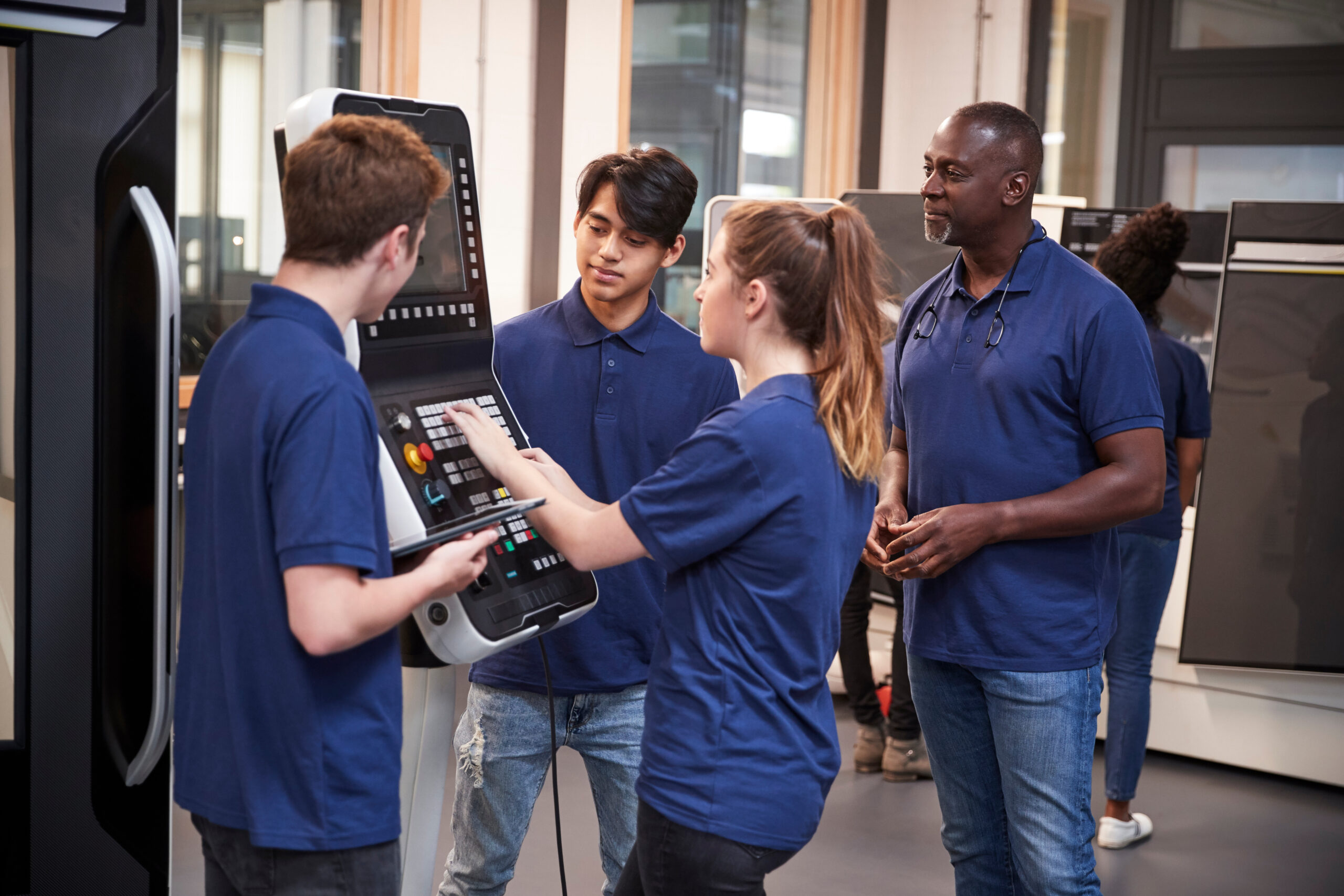
To address this challenge, education researchers at SRI collaborated with CTE instructors at Evergreen Valley College in San Jose, CA, through Project GOALS (Greater Opportunities to Advance Lifelong Success). This research-practice partnership funded by the National Science Foundation’s Advanced Technological Education (ATE) program, aimed to co-design, test, and disseminate research-informed resources to increase CTE instructors’ capacity to develop students’ professionalism.
Co-Design of Instructional Resources
SRI researchers partnered with CTE instructors in three fields—advanced manufacturing, automotive, and computer-aided design—to co-design and test a set of instructional resources based on three evidence-based learning principles for developing professional skills:

CTE instructors then tested these resources in their classrooms and provided feedback for refinement. One key insight: CTE instructors discovered a persistent gap in how students understood their own professional skill development. Specifically, students consistently gave themselves relatively higher ratings of observed professional skills than their instructors did. In response to this finding, CTE instructors asked SRI researchers to help develop additional instructional resources to deepen student understanding of these skills. Together, we engaged in class observations and interviews and a summer co-development workshop to create tools such as lectures with slides, video testimonials, labs with team roles, rubrics, and self- and peer reflection surveys.
Insights from Classroom Pilot Testing
As a final step, the instructors selected five of the resources to pilot test in the classroom. Through this process, we found that students reported greater engagement, deeper learning, and a clearer sense of the relevance of professional skills if CTE instructors implemented the resources using supportive instructional strategies—such as opportunities for personal sharing, class discussion, and presentation of aggregated reflection survey results that highlighted contrasts between instructor vs. student ratings—than if they implemented without these strategies.
Key Recommendations
For CTE programs to increase students’ professionalism, this researcher-practitioner partnership offers some promising strategies:
- In addition to using instructional strategies that focus students’ attention on professional skills, instructors should integrate more personal sharing, class discussions, and aggregated visualizations of reflection results. The Project GOALS team developed instructional handbooks that guide both instructors and students to implement the instructional strategies.
- Colleges can support and incentivize instructors to learn about the instructional resources and strategies through coaching and professional learning experiences, communities of practice, and collaborative course and lesson development.
- Colleges could offer students more opportunities to learn about the importance of professional skills firsthand from industry partners and offer industry-recognized “badges” for students to develop professional skills through both school-based and internship-based experiences.
Access the resources. For a more detailed description of each strategy, visit the Project GOALS curriculum webpage to access the free resources, including the instructor handbook, student handbook, instructor-facing and student-facing rubrics, and reflection tools.
Topics: Adult learners Career and technical education Community colleges Employability skills